

Sponsor serwisuBetclic
g4skins
Nowe
Najpopularniejsze
Poczekalnia
#budapestmajor
d3oo

flameZ: Teraz chodzi tylko o położenie wisienki na torcie, zamknięcie tego roku kolejnym Majorem

flameZ: Teraz chodzi tylko o położenie wisienki na torcie, zamknięcie tego roku kolejnym Majorem
Zdjęcie: ESL

flameZ: Teraz chodzi tylko o położenie wisienki na torcie, zamknięcie tego roku kolejnym Majorem

Cóż, to by dla nas dużo znaczyło. Mieliśmy oczywiście cholernie niesamowity rok. Prawdopodobnie zeszły sezon był najlepszym w historii. W tym sezonie zdobyliśmy jedno trofeum i dotarliśmy do dwóch finałów, awansowaliśmy do wszystkich półfinałów, i myślę, że teraz chodzi tylko o położenie wisienki na torcie, zamknięcie tego roku kolejnym Majorem back to back. Wiesz, wielu z naszych graczy będzie miało wtedy... ropz będzie miał trzy Majory. ZywOo też będzie miał trzy Majory, apEX cztery. To będzie szalona sytuacja dla drużyny, i oczywiście wszyscy chcemy to zrobić dla siebie nawzajem, ponieważ, wiesz... Jesteś bardzo szczęśliwy, jeśli zdobędziesz trofeum Majora w swojej karierze, a bycie w pozycji do zdobycia drugiego, trzeciego czy czwartego jest po prostu niesamowite

Źródło: HLTV
+6
g4skins
#iemcologne
TombStone

Porównanie wpływu 1. fazy IEM Cologne na ranking VRS w zależności od formatu i puli nagród

@JesperLarsen222

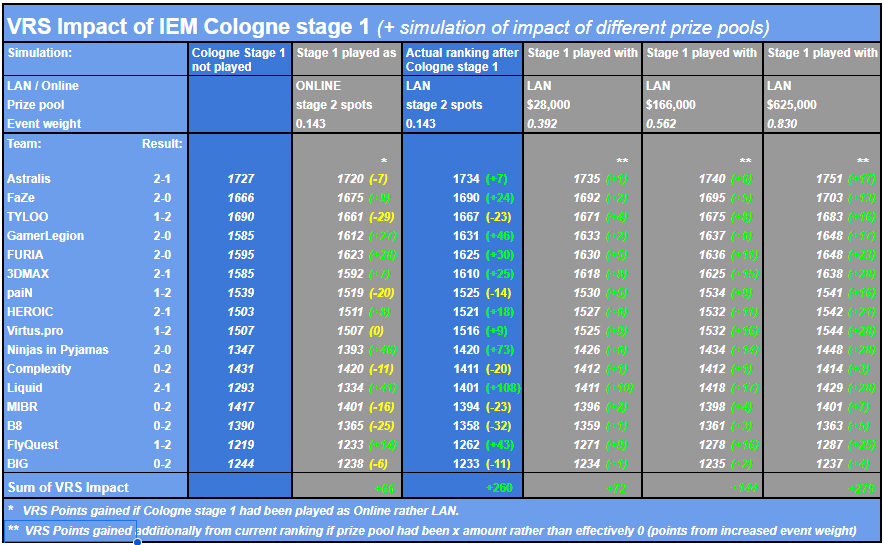
Wpływ VRS na 1. etap IEM Cologne (+ symulacja Online vs. LAN i różnych zmian puli nagród, aby pokazać teoretyczne skutki) Przede wszystkim tabela przedstawia rzeczywisty wpływ 1. etapu IEM Cologne na ranking VRS. Dwie ciemnoniebieskie kolumny pokazują: - Punkty VRS, jakie 16 drużyn uczestniczących w turnieju miałoby, gdyby wydarzenie się nie odbyło. - Rzeczywistą pozycję w rankingu tuż po zakończeniu wydarzenia. Jednakże, aby dołączyć się do dyskusji na temat tego, jak waga wydarzenia (która w 100% zależy od jego puli nagród) wpływa na punkty VRS, dołączyłem do tabeli również kilka innych symulacji. Różne symulacje wpływu na VRS, wynikającego z ustawienia puli nagród na różne kwoty, zostały dodane do tabeli dla łatwiejszego porównania. Ma to na celu jedynie przedstawienie faktów w dyskusji na temat zmiany, którą HLTV, jak się wydaje, wprowadzi od majora w Budapeszcie i w przyszłości. Zmiana ta została już na krótko wprowadzona w 1. etapie IEM Cologne, ale słusznie ją cofnięto, ponieważ zaproszenia na to wydarzenie zostały już wysłane. Wprowadzenie jej od 1. i 2. etapu majora wydaje się właściwym posunięciem. Ten post można również traktować jako informację, że ta dobra zmiana nadchodzi. Dalsza część tego postu będzie bardzo szczegółową i techniczną dyskusją na temat wagi wydarzenia, która prawdopodobnie zainteresuje tylko nielicznych. Być może posłuży jako źródło faktów w przyszłości (jest to ostrzeżenie, że ci, którzy nie są zainteresowani, mogą w tym miejscu zakończyć lekturę, jeśli w ogóle dotarli tak daleko). Tabela przedstawia następujące symulacje: Cologne stage 1 as Online rather than LAN (1. etap Cologne jako turniej online, a nie LAN): Dołączyłem tę symulację, aby pokazać, jak duży wpływ ma fakt, że wydarzenie jest turniejem LAN, a nie online. Można to potraktować bardziej jako komentarz do innych turniejów play-in, które zmieniono z LAN na online, niż jako istotną analizę IEM Cologne. Cologne stage 1 with 28k prize pool (1. etap Cologne z pulą nagród 28 tys. dolarów): 28 tys. dolarów to rzeczywista kwota nagród, którą otrzyma 8 drużyn, które nie awansują z 1. etapu. Z punktu widzenia danych (na których całkowicie opiera się VRS), jest to moim zdaniem minimalne rozwiązanie w celu prawidłowego ustalenia puli nagród dla wydarzenia play-in, a także rozwiązanie, na które zdecyduje się HLTV. Nie można zaprzeczyć, że rzeczywista pula nagród tego wydarzenia play-in wynosi co najmniej 28 tys. dolarów. Cologne stage 1 with 166k prize pool (1. etap Cologne z pulą nagród 166 tys. dolarów): Można jednak argumentować, że 28 tys. dolarów nadal nie odzwierciedla sprawiedliwej wagi wydarzenia play-in, takiego jak 1. etap Cologne. 28 000 dolarów vs. 1 250 000 dolarów to z pewnością nie jest właściwy sposób ważenia znaczenia 1. etapu w porównaniu z etapem głównym. 28 tys. dolarów to znacznie mniej niż średnia dla wydarzenia poziomu 2, a moim zdaniem, te wydarzenia play-in dla wydarzeń poziomu 1 z dużą pulą nagród powinny plasować się gdzieś pomiędzy głównymi wydarzeniami poziomu 1 a wydarzeniami poziomu 2. Alternatywnym pomysłem na zwiększenie wagi wydarzenia play-in mogłoby być wliczenie do puli nagród dla play-in kwoty, którą drużyny awansujące mają zagwarantowane, że co najmniej wygrają w następnym etapie. 8 drużyn, które awansują z 1. etapu, otrzyma co najmniej nagrody za miejsca 9-16 w głównym turnieju, co łącznie daje 138 tys. dolarów. Można by argumentować, że powinniśmy dodać te 138 tys. dolarów do 28 tys. i użyć tej kwoty jako puli nagród, którą 16 drużyn z 1. etapu co najmniej zdobędzie. W tym miejscu możemy zacząć się spierać, co jest najbardziej słuszne. Ponieważ głównym celem jest podniesienie puli nagród dla wydarzeń play-in do kwoty, która odzwierciedla ich względne znaczenie na podstawie danych, osobiście uważam, że ta metoda mogłaby być opcją, ale wymagałoby to albo przyjęcia przez HLTV tej metodologii ustalania puli nagród dla powiązanych wydarzeń, albo modyfikacji kodu przez Valve, co z kolei wymagałoby od HLTV dostarczenia Valve dodatkowych danych, ponieważ wydarzenia nie są obecnie powiązane w danych przekazywanych z HLTV do Valve. Najłatwiej byłoby, gdyby HLTV przyjęło tę metodę, ale jest to również nieracjonalne żądanie, aby HLTV musiało zmieniać sposób wyświetlania pul nagród, aby naprawić braki w systemie rankingowym. Ta zmiana wymagałaby również, aby HLTV zaakceptowało, że pula nagród z niektórych miejsc liczy się zarówno dla etapu play-in, jak i etapu głównego, co byłoby zmianą koncepcyjną w sposobie, w jaki HLTV prezentuje pule nagród. Pomysłem mogłoby być to, aby HLTV obliczało pulę nagród na potrzeby VRS ("Pula nagród VRS") jako oddzielny i mniej widoczny fragment danych, a na swojej stronie wydarzenia pozostawiło pulę nagród, którą chce prezentować. Cologne stage 1 with 625k prize pool (1. etap Cologne z pulą nagród 625 tys. dolarów): To kolejna alternatywna i łatwa do przyjęcia propozycja, jak ustalić pulę nagród. Można by po prostu argumentować, że pula nagród dla wydarzenia play-in powinna być ustalona na procent odzwierciedlający, ile miejsc w głównym wydarzeniu pochodzi z wydarzenia play-in. Wydaje się to rozsądne z punktu widzenia zasady. W tym przypadku 8 drużyn awansuje, a w głównym turnieju jest 16 drużyn, więc 8 drużyn teoretycznie zdobędzie 8/16=50% całkowitej puli nagród. Przy całkowitej puli nagród wynoszącej 1 250 000 dolarów moglibyśmy ustalić pulę nagród dla 1. etapu IEM Cologne na 625 000 dolarów. Jednakże, możemy tutaj dojść do punktu, w którym mecze z 1. etapu staną się zbyt wpływowe w obecnym modelu. Myślę, że tak duży wzrost wagi wydarzenia powinien iść w parze z dostosowaniem współczynnika LAN, który, choć niechętnie to mówimy w trosce o mniejsze turnieje LAN, jest prawdopodobnie potrzebny. Byłaby to większa zmiana, wymagająca dokładnej analizy. Argumentem, o którym musimy pamiętać w dyskusji na temat punktów zdobywanych w wydarzeniach play-in, jest cała koncepcja, że wyniki wydarzeń play-in sprawiają, że drużyny w całym wydarzeniu rozgrywają bardzo różną liczbę meczów. Z tego powodu musimy również mieć różnicę w wadze między etapami. Nie możemy po prostu przyznać im wszystkim równej wagi, ponieważ byłoby to ogromną przewagą w rankingu, gdyby zaczynać od etapu play-in i rozgrywać więcej gier. Rozwiązaniem jest osiągnięcie sytuacji, w której waga wydarzenia play-in jest znacznie niższa niż wydarzenia głównego, ale wciąż wyższa niż w przypadku gorszych wydarzeń, nad którymi chcielibyśmy, aby się plasowało. Moim zdaniem. Do tej pory wszystkie wydarzenia play-in plasowały się na najniższych pozycjach spośród wszystkich wydarzeń z powodu braku oficjalnej puli nagród (waga wydarzenia 0,143).

VRS impact of IEM Cologne stage 1 (+ simulation of Online vs LAN and various Prize pool changes to showcase the theoretical impact) First of all the table shows the actual VRS impact of IEM Cologne stage 1. The 2 dark blue columns shows: - VRS points the 16 participating teams would have had if the event had not been played - The actual ranking right after the event was finished. But.. to add to the discussion of how event weight (which is based 100% on the prize pool of an event) impacts VRS points, I have also included a few other simulations in the table. Various simulations of the VRS impact of setting the prize pool to different amounts have been added to the table for easy comparison. This is just to add facts to the discussion of the change, which it looks like HLTV will implement from the Budapest major and onwards. It was briefly changed already for IEM Cologne stage 1 as well, but correctly reversed, because the invites for the event were already sent out. Changing it from the Major stage 1 + 2 and forward seems the correct way to change it👍 You can also see this post as an information that it looks like this good change is coming. The rest of this post will be a very specific and technical discussion about Event weight which will probably only be interesting to a few people. Maybe it can serve as reference of facts later. (just to warn that those not interested can stop here if they even made it this far 😉) The table shows the following simulations: Cologne stage 1 as Online rather than LAN: I included this simulation just to add some insight into just how much impact it has that an event is LAN rather than Online. You can see it more as a comment on the other Play-in events being changed from LAN to Online, than as relevant for IEM Cologne analysis. Cologne stage 1 with 28k prize pool: 28k is the actual prize money which the 8 teams that don't advance from stage 1 will take home. From a data point of view (which VRS is based completely on), this is the minimum solution to setting the prize pool correctly for a Play-in event in my opinion and also the solution that HLTV will opt for. It can not be argued that the actual prize pool of this Play-in event is at least 28k. Cologne stage 1 with 166k prize pool: You could however argue that 28k still doesnt reflect the fair weight of a Play-in event like Cologne Stage 1. 28,000 vs 1,250,000 is hardly the correct way to weigh the importance of the stage 1 event vs the main stage. 28k is much less than your average tier 2 event and the way I see it, these Play-in events for high-prize pool tier 1 events should ideally rank somewhere between tier 1 main events and tier 2 events. An alternative idea to increase the event weight of play-in events, could be to include in the prize money for a play-in, the prize money which the teams that advance will be guaranteed to at least take home from the next stage. The 8 teams advancing from stage 1 will at least take home the bottom 8 prize placings from the main event, which is worth 138k in total prize pool. We could argue we should add these 138k to the 28k and use this amount as the prize pool the 16 teams from stage 1 will at least take home. Note that now we are in a place where we could start arguing back and forth as to what is the most correct. As the point is mainly to raise the prize pool amount for the Play-in events to an amount that reflects their relative importance, from something that is data driven, I personally believe this method could be an option, but it would require either HLTV to adopt this methology of setting the prize pool for linked events or Valve to modify their code, which again would require HLTV to supply Valve with additional data, as events are not currently linked in the data from HLTV to Valve. It would be easiest if HLTV adopted the method, but its also an unreasonable request, that HLTV have to change their display of prize pools to fix the shortcomings of the ranking system. This change would also require that HLTV could accept that prize money of some placings count for both Play-in and Main stage, which would be a conceptual change of the way HLTV is showing prize pools. An idea could be that HLTV calculated the prize pool for VRS purpose ("VRS Prize pool") as a separate and less visible piece of data and keep prize pool on their own event page as the amount they would like to present. Cologne stage 1 with 625k prize pool: This is just an additional alternative easy to adopt idea of how to set the prize pool. You could simply argue that the prize pool of a Play-in event should be set to a percentage reflecting how many of the main event spots comes from the Play-in event. Seems reasonable actually from a principal point of view. In this case 8 teams advance with 16 teams in the main event, so the 8 teams will theoretically take home 8/16=50% of the total prize pool. With the total prize pool being 1,250,000 we could set the Prize pool of IEM Cologne stage 1 to 625,000. However we may reach a point here where matches from the stage 1 event becomes maybe too powerful in the current model. I think such a big increase in event weight should go hand in hand with an adjustment of LAN factor, which as much as we hate to say it, for the sake of smaller LANs, is probably needed. Which would be a bigger change requiring some careful analysis. An argument we have to remember in the discussion of points gained from Play-in events, is the whole concept of Play-in events results in teams in the overall event playing very different number of matches. For this reason alone we also have to have a difference in weight between the stages. We can not simply give them all equal weight, because then it would be a huge ranking advantage to start from the Play-in event and get more games. The solution is to end up where the Play-in event weight is well under the main event but still also higher than the inferior events which we would like it to rank above. In my opinion. Up until now all Play-in events have ranked as the lowest of lowest of all events due to not having an official prize pool (0.143 event weight).

3
0
+1
Tagi:#iemcologne#VRS